Showing posts with label branding. Show all posts

Tuesday, August 10, 2010

Twitter+ Fast Follow = Huge Change!


Twitter just made a major change to their network which is going to effect businesses substantially. I am not sure how many brands are going to appreciate the shift (to start with), but if you read this blog I will try to give you a head start.


::The Basics::
What is Fast Follow: Fast follow lest you follow any twitter account (even if you dont have one) via SMS.
How it works: Send an SMS message to 40404 in the message text enter "follow @[username]"
What Happens: You then will receive SMS updates from that twitter feed when the status is updated.

Fast Follow will likely follow the same rules that filter out messages starting with @[username] already in place.

Why it matters:: Fast follow gives businesses the ability to offer customers discounts, features, and news via text. For Free! If brands are smart they should leverage this feature with Fast Follow accounts. On all print they can provide Fast follow sign-up steps and offer a discount in store. Suddenly you have a follower and a broadcasting platform. Fast Follow accounts would give smart brands the ability to quickly reach mobile users. However it should change their behavior on twitter so they don't annoy fast followers.

In my opinion Re-tweets, Linking to blogs, links to news, and late night/early morning tweets should all be off limits for these accounts.

Your thoughts??

Tuesday, August 3, 2010

Is Safe Smart Business?


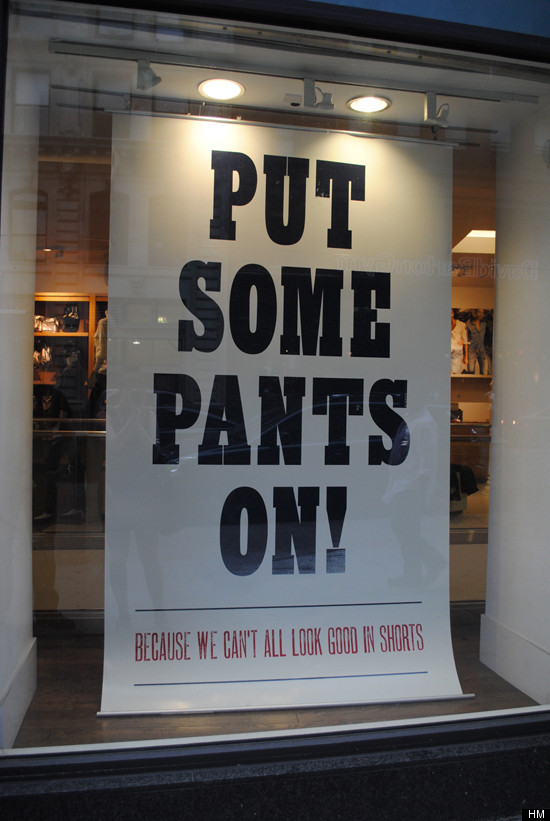
This week Gap created a small buzz with the in store advertisement above. The ad is risky and has offended some. However the Ad is being noticed... The Huffington Post ran
an article asking users if the Ad was offensive or cleaver. Only 20% of respondents indicated that the Ad was offensive.

Is this a bad thing?

I am not calling for full scale offensive/classless advertising, but I dont think safe is smart. The Golden age of advertising when bland safe messages were able to generate sales is probably dead and gone forever. The average american consumer see far too many ads in one day. In a small
Starbucks in Signal Hill CA, I counted 85 different brand messages IN the store. Everything from Apple laptops to Tazo tea, to Nike Logos is in this one little place.


With this much visual saturation how on earth do you make a message stick out? I think one way is to do something unexpected. Only unexpected has a tendency to offend 20%... but isn't that old news the classic flipped 80/20 rule?

-->In case you dont know the 80/20 rule says 80% of revenue comes from 20% of your client base. The flipped 80/20 rule says that 20% of consumers will hate your brand no matter what you do. These numbers are always pretty consistant. For some reason (probably fear) many brands give power to the 20% that hate them, and try to win them over. Lets look a little closer...

There are 20% of consumers who will never by a Foreign car.
Should foreign manufactures produce cars in the US?
(Some brands are trying but they still aren't winning that 20% over)

There are 20% of consumers that will never by a domestic car.
Should domestic automakers produce cars overseas?

Why dont companies ignore the 20% that hate them? Why don't more brands do what Gap is doing?
Its smart to focus on the 20% that generate revenue and the 40% that havent made up their mind about you yet. If safe is reaching that group than safe maybe smart! If safe isn't reaching that 60% than maybe its time to make a little noise... just expect to offend the 20% of consumers that are going to hate you!

This rule probably applies to interpersonal relationships as well...

Do you ever meet people with the expectation that roughly 20% will not like you?
Have you ever just decided to accept it, and be who you are regardless?

-Side note if substantially more than 20% hate you... you are probably doing something wrong. From an interpersonal level its realistic for that number to be much much lower over time.

Tuesday, April 13, 2010

Pampers Ad? Wait Huggies Ad...

This is a little weird but I would like to break this out a little bit... If you havent seen the Ad below yet check it out...


When I first saw this ad i thought it was brilliant creative, cuts through the noise, and communicates a clear message via story. However the creators forgot about their target market when it came to selling the product (really busy moms and dads). For some reason they decide to name Pampers by name 1st... WHY?
This is a classic case of paying too much attention to the wrong details. When a buyer goes to the store they now have to balance two brands in their head. This balancing act complicates a simple transaction. This is a fail and my hunch is Pampers will also see a bump in sales. Who ever made the ad should take note, the public isn't paying that much attention to Ads.

Wednesday, April 7, 2010

Coca-Cola: Now That's a Brand!

Coca-Cola is the benchmark of powerful branding... its not all in the name, its all about delivering quality product over and over again. When you open a Coke you know what you are getting!

Saturday, August 1, 2009

::Why Disney has it right::

Recently, I read Creating Magic, which is essentially about how Disney leads their people to function as an extension of their brand. Disney is an innovator in this area. They have created a culture where each of their cast members own a stake in the ideas, values, and company. Disney cast members are more likely to act in a way that is consistent with the company's overall vision and objective as a result.


How they created ownership

1. Brand with value
Clearly communicating that people matter (*employees are people) dramatically increases what employees are willing to do for a company. Employees that are valued are more likely to invest themselves into a brand message. Companies that treat people with disrespect end up with weak brands. Strong brands start with employees that are valued and respected.

2. Keep what matters in focus
The customer is often forgotten in minor policy adjustments even though many of these adjustments often affect the customer. I have seen small companies choose organizational convenience over customer service and do great harm as a result. Customer service is hard especially when workers get far removed from customer interaction. Listening to the customer and what front-line employees are communicating about customer needs gives a brand relevance.

3. Everything that is done matters
How many times have we really considered how important a Janitor is to our daily lives? How often do we think of the bus boy as a person that can make or break our day or business? Too often in our world the jobs that are low in pay are low in prestige. The sales force gets training while the shipping departments are trained only as much are necessary. Companies with a strong brand culture communicate value to every single position in addition to every person.

4. Training
The best way to communicate value to employees is to train and develop them as people. If a brand sets out to communicate excellence and value, then the brand must be willing to equip staff to fulfill this role. Too many businesses fear that they loose top talent because with adequate training, the employees might out grow their jobs. However, if training is done correctly, that type of shrinkage could actually be good news. Loosing top talent (managers etc.) actually opens up spaces for movement. A company with opportunity will actually result in creating a culture where you don’t loose top talent, you get more.

Much of this post is in response to Seth Godin's blog. Click the head below to check it out.

Thursday, July 23, 2009

Book Review :: Creating Magic

Creating Magic is a book I would suggest for everyone from High schooler's to Grandparents. The marketing idea behind the book is leading people in such a way that they become the brand. The book is written by the Disney executive who ran Walt Disney World for several years. It includes a lot of stories and anecdotes and it probably paints Disney in a slightly better light then it might deserve... However, that's actually a good thing. Cockerell sees Disney for what it can be which is how great leaders should see an organization. He also owns up to where they were and where they are so it can't be read as pie in the sky or idealism.

The book is really about how Disney has defined 10 key components they expect leaders to exhibit (They call them GLS- Great leadership Strategies). These are skills which develop people by affording them meaning and value in simple front line jobs. However, Cockerell's writing extends to so many other applications outside of the workplace, anyone can get something out of them.

This has probably been my favorite read of the summer, partially because I read it on my own accord. I think Disney has some of the best people in the world. Every cast member I have EVER come into contact with has been a professional and exceeded the level of service I anticipated (bare in mind I had annual passes to Disneyland for 3 years in a row).

This book is pragmatic, accessible, and in a summer of great reads something that stands out from the pack.

Warning: It is what you would expect from someone who believes in their product. I have no problem with this, I wish more people believed in what they did in the same way as Cockerell the world would be a better place.